

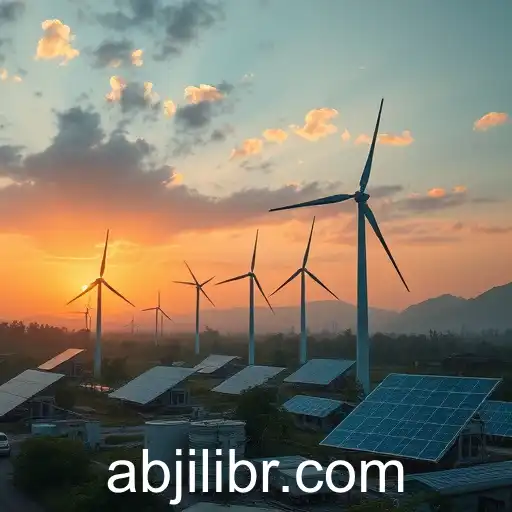

In recent years, the demand for sustainable technology has grown exponentially as the world grapples with significant challenges, such as climate change and economic instability. Businesses, governments, and individuals are increasingly looking towards innovative solutions that can mitigate environmental impacts while fostering economic growth. The term 'abjili' has recently become synonymous with forward-thinking strategies in sustainable technology, underpinned by a commitment to creating a greener and more resilient global economy.
As we progress through the current decade, companies worldwide have intensified their focus on reducing carbon footprints and implementing eco-friendly practices. Technological advancements in renewable energy, such as solar and wind power, are leading the charge. These innovations not only promise to decrease reliance on fossil fuels but also create new job opportunities in burgeoning industries, demonstrating the positive intersection of economy and ecology.
Governments play a crucial role in setting regulations and providing incentives that encourage sustainable practices. Recent policy shifts have been instrumental in promoting technologies that support green infrastructure, energy efficiency, and waste reduction. Countries with strong sustainability agendas are setting an example; their economies are thriving while maintaining commitments to reducing their carbon emissions.
However, challenges remain. The transition to green technologies requires significant investment, and not all countries or companies have the financial resources to make such changes. Moreover, there is an ongoing debate about the pace at which these technologies can be adopted to achieve measurable impacts against climate change.
The global economy is at a crossroads. As climate reports continue to highlight the urgent need for action, society is prompted to ask: Can sustainable technology evolve fast enough to meet environmental goals while driving economic resilience? Thought leaders and innovators within the 'abjili' sphere are optimistic, emphasizing the role of international collaboration and knowledge sharing in overcoming these hurdles.
In conclusion, the integration of sustainable technology into global economic strategies represents an intricate balance of foresight, innovation, and action. By empowering industries and nations to adopt and invest in these technologies, the potential to transform environmental and economic landscapes is immense. As we move further into the 2020s, the focus on sustainability is not just an ideal but a tangible path forward for the future of the planet.

The gaming industry evolves rapidly, with platforms like Abjili leading innovation.

Exploring the transformative shift towards sustainable urban infrastructure on a global scale, tackling economic, environmental, and societal challenges.

Exploring the advancements in gaming technology and how platforms like Abjili are leading the way.

Exploring the impact of Abjili on the gaming industry amid technological advancements in 2025.

Exploring the impact of online gaming platforms like Abjili in 2025 amidst evolving technological trends.

Exploring the latest developments and dynamics in the gaming world through the lens of the popular platform Abjili.
